 Made in USA


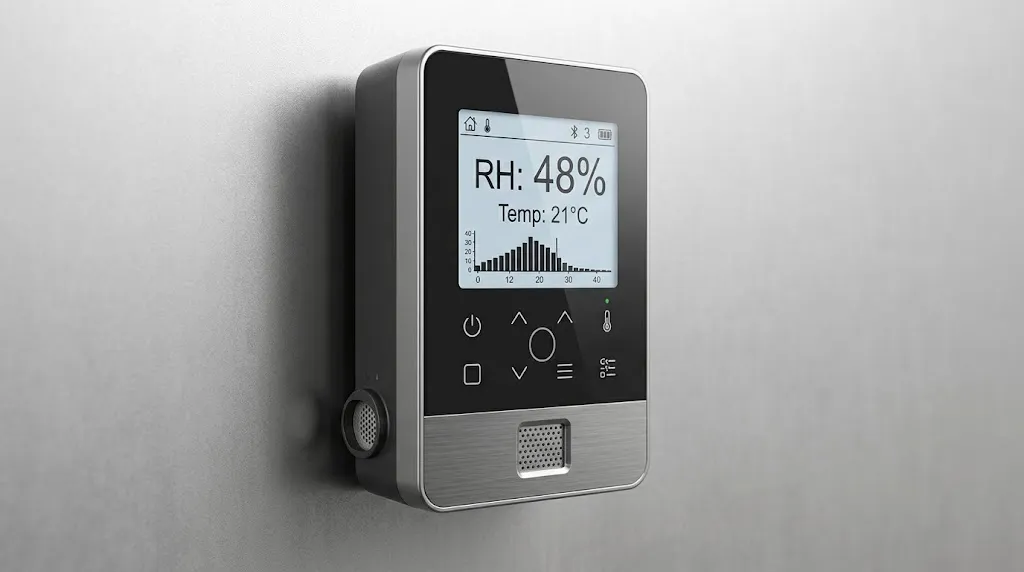
Relative Humidity Formula: Step-by-Step Calculation
Relative humidity is calculated as the ratio of actual vapor pressure to saturation vapor pressure, expressed as a percentage. This guide presents the RH formula, a step-by-step worked example, and an embedded calculator for immediate results.

Relative Humidity Requirements by Industry
Humidity requirements vary significantly by industry, and operating outside the correct range creates regulatory, equipment, and product quality risks. This guide presents specific RH targets by sector, with governing standards and compliance consequences for each.
Sensible vs Latent Heat: Why Humidity Drives Cooling Cost
A thermostat only measures one type of heat. This article explains the difference between sensible and latent heat, why water vapor carries hidden energy, and how that drives up cooling cost in humid environments.

Humidity Ratio Explained (and How to Calculate It)
Humidity ratio measures the mass of water vapor per unit mass of dry air. This guide explains what it means, how to locate it on a psychrometric chart, and how to calculate it using the standard psychrometric formula.

Humidity and Static Electricity: The RH Range That Stops ESD
Static electricity risk is directly tied to relative humidity, but the answer is not simply “keep it above 40%.” This article breaks down the full RH spectrum zone by zone, showing what happens below, within, and above the recommended range and why both bounds matter for ESD control.

Dew Point in Cold Storage: Preventing Sweating & Ice
Uncontrolled dew point causes sweating surfaces, floor ice, evaporator blockage, and product spoilage in cold storage. This guide explains how dew point behaves across facility zones and what facility managers need to evaluate to prevent it.

Data Center Dew Point: ASHRAE Ranges & ESD Risk
ASHRAE TC9.9 defines specific dew point limits for data center environments, and operating outside those limits creates two distinct failure modes: electrostatic discharge at the low end and condensation at the high end. This article explains the class envelopes, the thresholds, and the operational risks at each boundary.

How to Prevent Condensation on Cold Surfaces
Condensation forms when a surface falls below the dew point of surrounding air. This guide covers surface-specific prevention methods including insulation selection, vapour barriers, surface heating, and ventilation, applied across pipes, windows, AC vents, and cold industrial equipment.

Wet-Bulb Temperature Explained
Wet-bulb temperature measures how much the air’s humidity limits the body’s ability to cool itself through sweating. This guide explains what it is, how it is measured, and why it matters for human health and industrial facilities.